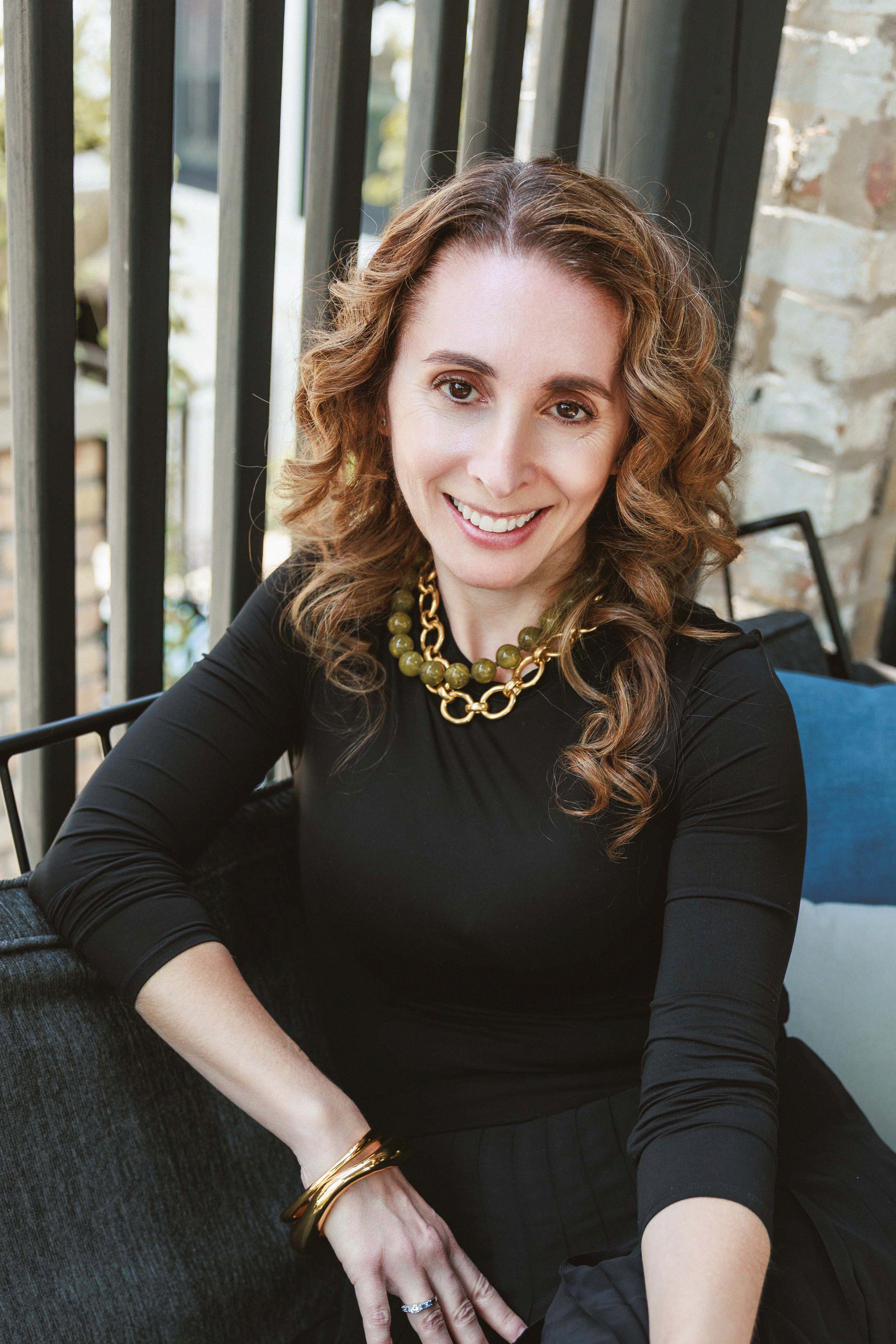
A couple of months ago, I had the privilege of speaking at TEDx New River.
My talk wasn't about artificial intelligence. It wasn't even primarily about medicine.
It was about permission.
Permission to change. Permission to stop performing competence. Permission to ask better questions, and not only of our patients, but of ourselves.
Toward the end of the talk, I mentioned a clinical reasoning platform I built called ReasonDx. It came out of something that had bothered me for years.
The Gap I Couldn't Stop Noticing
I have watched extraordinarily bright medical students get the wrong answer when it came to real patient cases.
Not because they lacked knowledge. They were brilliant at memorizing and picking the right multiple choice answers.
The issue is that they were never explicitly taught how to reason under uncertainty.
- They could recite pathways.
- They knew mechanisms cold.
- They memorized diagnostic criteria with precision.
But when the case became messy, when data conflicted, when symptoms didn't neatly align, when the obvious answer wasn't quite right, something fractured between knowledge and judgment.
That gap is not about intelligence. It's about training.
We Are Entering a Different Era
For most of modern medical education, memorization was currency.
The more you knew, the more valuable you were. On the wards, on exams. Being able to spit out the answer quickly and with confidence improved evaluations and scores.
Today, AI systems can retrieve more medical knowledge in seconds than any clinician could hold in a lifetime.
- Every pathway.
- Every lab interpretation.
- Every rare zebras-on-a-Tuesday diagnosis.
Our current and future physicians will never out-memorize AI.
And they shouldn't try.
The question is no longer "How much can you store?"
It's "How well can you think?"
What AI Can and Cannot Do
AI can generate possibilities. It can synthesize literature. It can suggest differentials.
But it cannot:
- Own clinical responsibility
- Detect subtle contextual cues
- Recognize when a story doesn't fit
- Navigate moral complexity
- Sit with uncertainty in a human body in front of you
It does not carry judgment.
Clinical excellence in the AI era will not belong to those who compete with machines. It will belong to those who know how to partner with them.
The Real Skill: Structured Curiosity
What I wish we trained more deliberately is structured curiosity.
The disciplined habit of asking:
- What else could this be?
- What assumption am I making?
- What data would disprove my leading diagnosis?
- Where might cognitive bias be influencing me?
Clinical reasoning is not just logic. It is metacognition. It is knowing how you think.
That skill does not emerge automatically from memorization. It must be trained.
Why I Built a Reasoning Platform
For years, I couldn't stop thinking about that gap. So I built a clinical reasoning platform designed to teach the skill that flashcards and multiple choice can't.
Not as a content dump. Not as another flashcard system. As a way to make clinical reasoning the thing you train, not the thing you hope happens by accident.
It includes interactive cases, pathophysiology modules, differential-building tools, and spaced repetition integrated into reasoning rather than separate from it.
The goal is not to compete with AI. The goal is to produce clinicians who can use AI wisely. Those who can test its outputs, refine its suggestions, and recognize when its reasoning doesn't match the patient in front of them.
Because memorization is becoming commoditized.
Thinking is not.
A Question for the Medical Education Community
Are we training students for the pre-AI era? Or the era they are actually entering?
If we continue to optimize primarily for recall, we risk producing physicians who feel displaced by technology.
If we train reasoning, judgment, and disciplined curiosity, we produce physicians who are amplified by it.
memorization is commoditized. thinking is not.The future of medicine will not be defined by who knows the most.
It will be defined by who thinks the best.
This piece sits at the intersection of my coaching work and my work as a medical educator. Both are about the same thing: helping people learn how to think, not just what to recall. If you'd like to talk about either, book a free coaching session.
Comments and conversation live on the Substack version of this post. Join the discussion there.
Get new posts by email
Permission to Change: Finding Your Ikigai, straight to your inbox. No spam, unsubscribe anytime.