The holidays put everyone you love in one room, with every old role still assigned. The host. The fixer. The one who drives everyone home. You can run a department all year and still walk into your parents' kitchen and become twelve again.
Family boundaries are harder because the history is longer and the guilt is louder. This page gives you a simple plan and word-for-word scripts for Thanksgiving, the December stretch, and every family gathering after. For the basics, start with how to set boundaries when you're the one everyone relies on.
Why boundaries with family feel so much harder
The roles are old. You show up as the adult you are. Your family often sees the person you were at sixteen.
Guilt does the arguing. At work, a no is a scheduling decision. At home, it can feel like a verdict on how much you love someone.
The stakes feel permanent. You will see these people every year. That is exactly why the boundary matters. What you allow this year becomes the arrangement next year.
Decide before you walk in the door
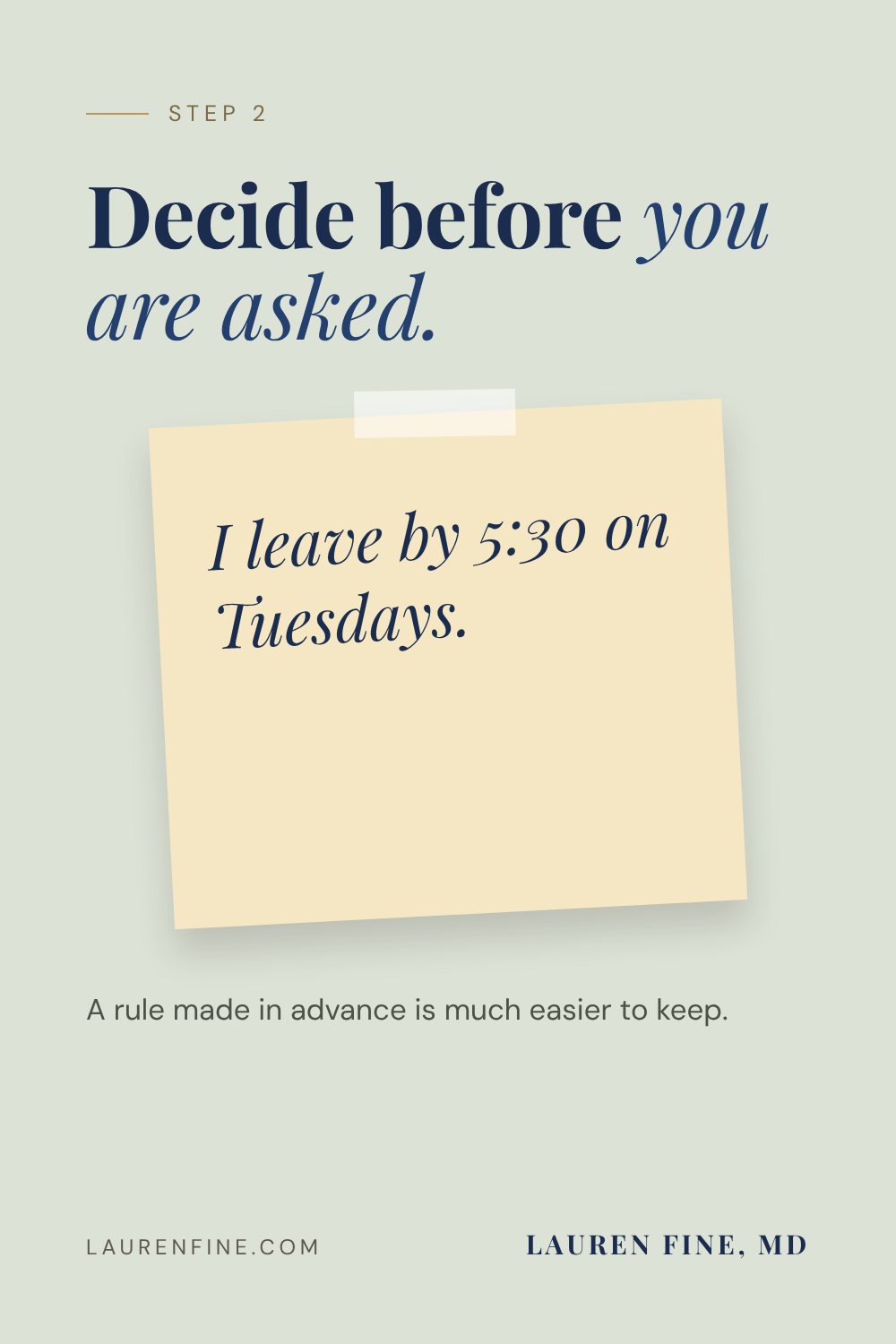
Boundaries fail in the moment because you are deciding under pressure. So I want you to decide four things before the holiday:
- Time. When you arrive and when you leave.
- Topics. The one or two subjects you will not discuss this year.
- Tasks. What you will host, cook, or pay for, and what you will not.
- Your exit. What you will do if a conversation turns.
Then tell the person once, kindly, before the holiday. Not at the table. A boundary announced in advance is a plan. A boundary announced mid-argument sounds like a punishment.
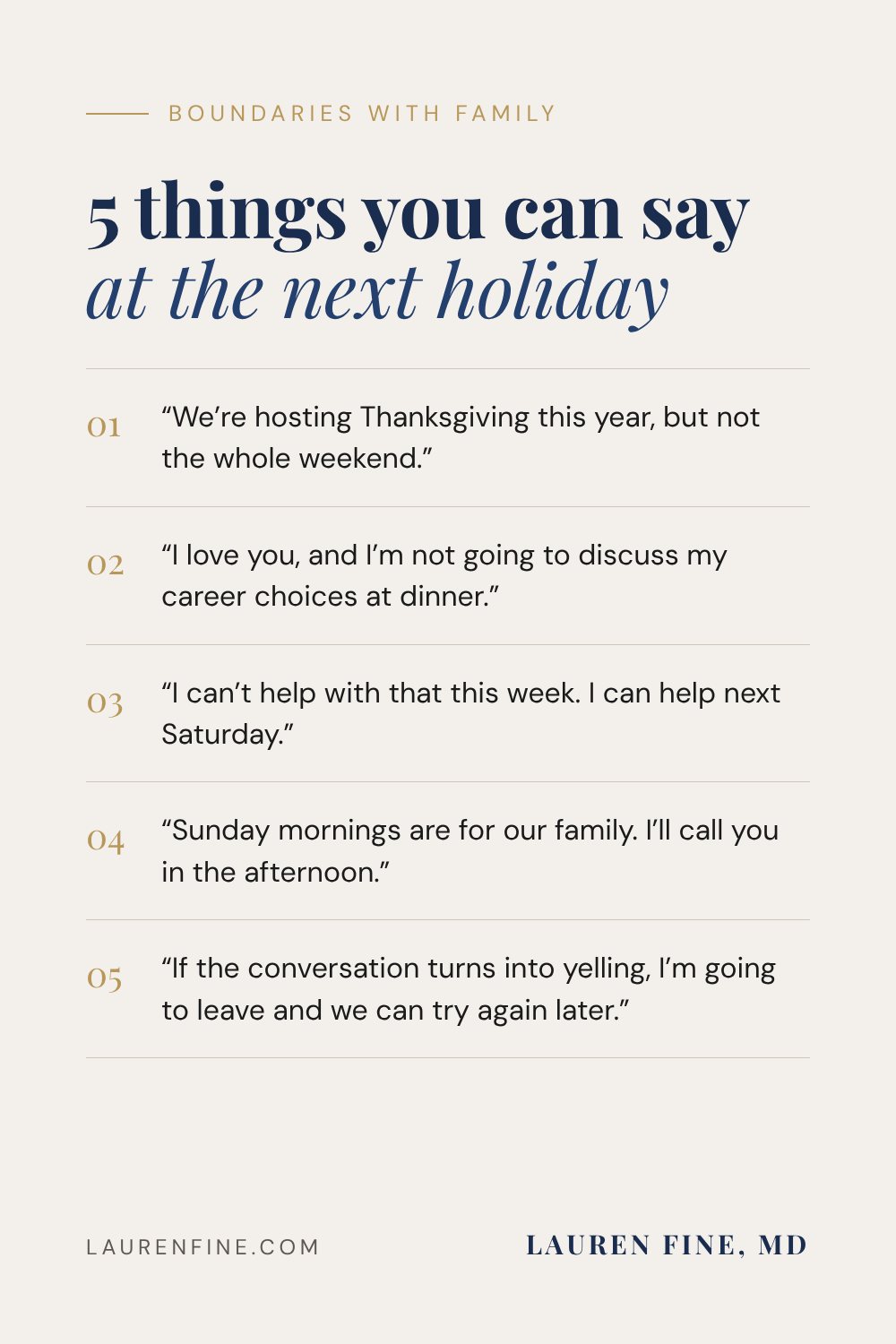
Holiday boundary scripts you can use this year
Hosting and how long the visit lasts
- “We're hosting Thanksgiving this year, but not the whole weekend.”
- “We'd love to have everyone for dinner on Thursday. We're going to keep Friday low-key, just us.”
- “We're going to get a hotel this time. We'll be over in the morning for breakfast.”
Questions about your career and life choices
- “I love you, and I'm not going to discuss my career choices at dinner.”
- “I'm really happy with where things are. How's work going for you?”
Comments about food, bodies, or parenting
- “I'd rather not talk about weight today. Can you pass the potatoes?”
- “I know you mean well. We're going to handle bedtime our way.”
Requests for help, money, or time
- “I can't help with that this week. I can help next Saturday.”
- “I'm not able to lend money right now. I know that's hard to hear.”
Protecting your own family's time
- “Sunday mornings are for our family. I'll call you in the afternoon.”
- “We're going to stay home Christmas morning this year. We'll come over after lunch.”
When it gets heated
- “If the conversation turns into yelling, I'm going to leave and we can try again later.”
- “I need a minute. I'm going to take a walk, and I'll be back.”
What to say when they push back
The first no is easy. The second ask is where most boundaries fall apart. With family, it often comes wrapped in history. "Just this once." "After everything I've done for you." "It won't feel like a holiday without you."
Do not add new reasons. Every new reason is something to argue with. Repeat yourself calmly:
- “I understand. My answer is still no.”
- “I know this is disappointing. We're still going to head out at eight.”
The Second Ask is a free worksheet with word-for-word replies for guilt, urgency, and the repeat ask.
Follow through, even when it's awkward
Leave when you said you would leave. Change the subject when you said you would change it. The first year, people will test it. That is normal. A boundary you keep only sometimes teaches people to ask twice. Hold it for the whole season, and next year the asking slows down.
When it is more than frustrating
If a family relationship feels unsafe, not just frustrating, start with a licensed therapist. A coach is the right partner for building skills and making decisions. A therapist is the right partner for safety and for healing old wounds. Not sure which you need? The free Coach or Therapist check takes two minutes.
Make room
You will never find time for what matters at the holidays. You make room. Pick one boundary from this page. Decide it now, say it once, and hold it all season. Then notice what you got back.
Start with the free Say No Scripts, 12 word-for-word ways to turn something down without burning the bridge. Or book a free 55-minute session if you want help deciding what to protect first. No sales pitch.
Frequently asked questions
How do I set boundaries with family during the holidays?
Decide four things before you go: when you arrive and leave, which topics you will not discuss, what you will host or pay for, and what you will do if a conversation turns. Tell the person once, kindly, before the holiday. Then follow through.
How do I say no to hosting the holidays?
Say it early and keep it short. "We're not able to host this year. Is there something else we can help with?" Offer what you can do, not a list of reasons.
What do I say when a relative asks about my job, weight, or relationship?
Give one short sentence and change the subject. "I'm really happy with where things are. How's work going for you?" You do not owe a defense.
Is it okay to skip a family holiday?
Yes. You can decline an invitation. Say it early and kindly: "We're not going to make it this year. Can we plan a visit in January?"
What if my family gets upset when I set a boundary?
Because the old arrangement worked for them. Some pushback is normal. Stay calm, repeat yourself once, and hold it for the whole season. Most people adjust faster than you expect.